
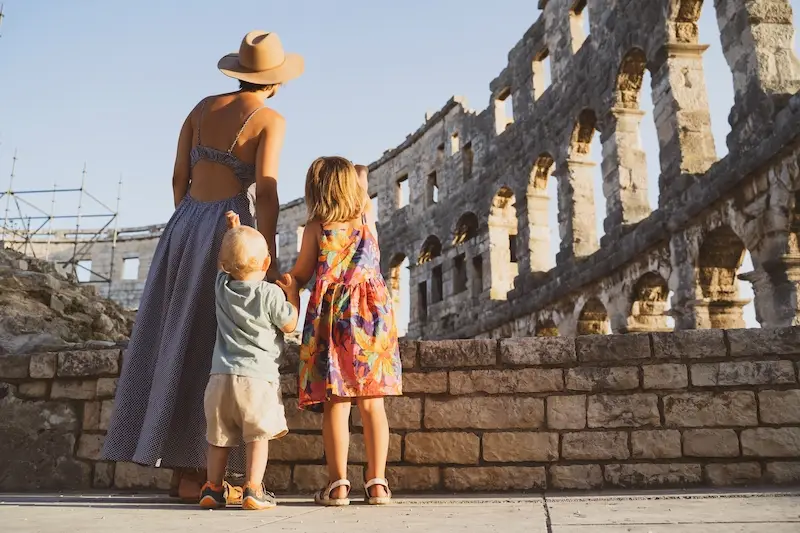
Rome works with kids if you keep it to one big sight a day, lean into the gladiators-and-emperors stories that make ancient history come alive, and build in gelato stops and downtime. The city is one enormous open-air history lesson — the trick is pacing it so children stay curious instead of overwhelmed. Here’s a realistic three-day family itinerary, with the things that genuinely land with kids and the mistakes that turn a Roman holiday into a meltdown.
The One Rule That Makes Rome Work with Kids
One major sight per day. Not two.
The single most common mistake families make is stacking the Colosseum and the Vatican into one day because “we’re only here for three days.” It’s too much — hours of walking, queuing, and concentration that no child sustains. You end up dragging tired kids through the Sistine Chapel at 4pm, and nobody remembers any of it fondly.
Pick one headline sight each morning, do it well, and leave the afternoon loose. Rome rewards this. The city itself — the fountains, the ruins you stumble on, the gelato — fills the gaps without any planning.
What Actually Works with Kids in Rome
Before the day-by-day, the things that reliably land:
- Gladiators. The Colosseum isn’t an abstract ruin to a child — it’s where gladiators fought, and that story hooks them instantly. Lean into it.
- The “biggest, oldest, deadliest” framing. Kids respond to superlatives. The biggest amphitheatre, the oldest street, the emperor who did the maddest thing.
- Hands-on and underground. Descending beneath a church into an older Rome, or the layered levels of San Clemente, feels like time travel. Physical, not passive.
- Short, story-led guided visits. A good child-friendly guide with an iPad or 3D overlay book turns a pile of stones into a story. Left to a guidebook, most kids switch off.
- Frequent food. Gelato and pizza al taglio are itinerary tools, not just snacks.
Day 1: Ancient Rome — The Gladiator Day
Morning: The Colosseum
This is the anchor of the trip and the sight most likely to captivate children of any age. The heart of Ancient Rome, where gladiator games were held in front of 55,000 spectators, it’s a spellbinding experience for kids and adults alike — the sheer scale makes everyone feel very small.
The arena floor experience is the one worth booking for children: entering through the Gladiator’s Gate, the same entrance the fighters used, and standing on the arena stage looking down into the dungeons where wild animals were kept. That’s the moment that turns “a big old building” into a real story.
A child-friendly guided Colosseum tour is worth it here more than almost anywhere — a guide who knows how to keep kids hooked with gladiator stories does what no self-guided ticket can, and includes the pre-booked access so there’s no queuing with restless children.
Afternoon: Roman Forum, or stop while you’re ahead
The Forum and Palatine Hill are usually bundled with the Colosseum, and for older kids the Ancient Rome Adventure for Kids covers all three in a manageable three hours. For younger children, consider stopping after the Colosseum — you’ve had the highlight, and pushing on through ruins in the afternoon sun is where the day can unravel.
Kids’ bonus: near the Colosseum, the Gladiator School (Gruppo Storico Romano) runs training classes where children dress in tunics and learn basic swordsmanship — a two-hour hands-on experience that’s often the trip’s favourite memory.
Day 2: The Vatican — Short and Strategic
The Vatican is the hardest sight to do with kids, and the one that most needs a plan.
Morning: Vatican Museums and Sistine Chapel
The museums are long, crowded, and easy to get wrong with children. Two things save it:
- A kids-focused route. The Egyptian Museum with a real mummy, the enormous porphyry bathtub of Emperor Nero, the animal statues in the Round Room — a child-oriented guide heads for these, not the tapestry-by-tapestry march that bores adults too.
- Skip-the-line entry. Queuing to get into the Vatican with kids is where family days die. Pre-booked access is close to essential here.
The Vatican for Kids tour is built around exactly this — a three-hour route hitting the pieces children actually respond to (the mummy, the statues, the stories of papal families and artists’ rivalries), with skip-the-line tickets. The night version has the added advantage of smaller crowds, which with kids is a real gift.
Afternoon: St. Peter’s Square and downtime
After the museums, St. Peter’s Square gives kids room to run. Then stop. Two Vatican halves is a full day.
Day 3: The Fun, Free, Low-Pressure Day
After two big-hitter days, day three is deliberately light — and often the one kids love most.
- The Trevi Fountain — toss a coin, tell them the legend that it guarantees a return to Rome. Quick, free, magic.
- The Pantheon — free to enter, and the hole in the roof (the oculus) genuinely fascinates kids. “What happens when it rains?” (It does rain in — that’s the point.)
- The Spanish Steps — space to sit, people-watch, and eat gelato.
- Piazza Navona — fountains, open space, often street performers.
This is the day with no tickets, no queues, and no schedule. Wander between the piazzas, follow the gelato, and let Rome be a city rather than a series of monuments. For a fuller version of this route, our guide to the best things to do in Rome for first-timers covers the walkable historic centre.
The Practical Stuff That Matters with Kids
- Cobblestones and strollers don’t mix well. Rome’s sampietrini (cobbles) are brutal on stroller wheels and little legs. A carrier can work better than a stroller for younger children; comfortable shoes are non-negotiable for everyone.
- Book skip-the-line for the big sights. With kids, the queue isn’t an inconvenience — it’s the thing that ends the day early. This is the single highest-value decision.
- The nasoni are your friend. Rome’s public drinking fountains run cold, clean water all over the city — bring refillable bottles and use them.
- Time your big sights early. Morning slots mean cooler temperatures, shorter queues, and kids at their freshest.
- Book restricted access ahead. Arena floor and underground tickets for the Colosseum are limited and sell out early — see our guide on how far in advance to book Rome’s attractions.
What to Skip with Kids
- A second museum in one day. Covered above, but it’s the big one.
- Long, comprehensive walking tours aimed at adults. Kids need short and story-led, not thorough.
- The Vatican on a free-entry Sunday. The crowds are overwhelming — the opposite of what works with children.
- Trying to “finish” Rome. You won’t, and treating it as a checklist is how the trip stops being fun.
For the full range of family options, see our Rome kids tours.
FAQ
Is Rome good for kids?
Very — it’s essentially an open-air history lesson, and the gladiators-and-emperors stories bring ancient history alive for children. The key is pacing: one major sight a day, plenty of gelato and downtime, and story-led guided visits rather than long adult-oriented tours.
How many days do you need in Rome with kids?
Three works well: one day for the Colosseum and ancient Rome, one for the Vatican, and one low-pressure day for the fountains and piazzas. This keeps it to one big sight a day, which is the pace that works with children.
What’s the best Rome sight for children?
The Colosseum. The gladiator stories hook kids instantly, and entering through the Gladiator’s Gate onto the arena floor is the moment that makes ancient history real. A child-friendly guide makes a big difference.
Is the Vatican worth visiting with kids?
Yes, if you do it strategically — a kids-focused route (the mummy, Nero’s bathtub, the animal statues) with skip-the-line entry. Avoid the free Sunday crowds, and don’t pair it with another major sight the same day.
Do I need a guide for Rome with kids?
Not essential, but child-friendly guided tours add a lot — they keep children engaged with stories and props, and the included skip-the-line access avoids the queues that end family days early. For the Colosseum and Vatican especially, it’s worth it.
How do you handle Rome’s cobblestones with a stroller?
With difficulty — the cobbles are hard on stroller wheels. For younger children a carrier often works better, and comfortable shoes matter for everyone. Plan shorter walking stretches than you would without kids.


