
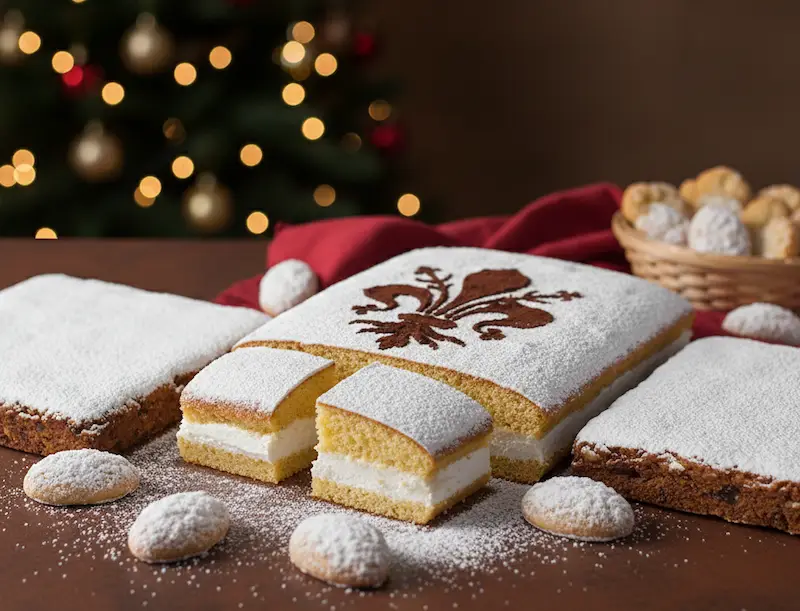
Florence in December smells of citrus, spices, roasted almonds, and holiday warmth. While Tuscany boasts a rich Christmas tradition, the city preserves some of the region’s most iconic winter sweets—recipes born in monasteries, noble palaces, and artisan bakeries. These treats are more than desserts: they are fragments of Florentine history, carried forward with pride by families and pastry masters.
To experience these traditional flavors through the eyes of locals, our Florence guided tours include seasonal tastings in historic bakeries and artisan shops where Christmas recipes are still prepared according to centuries-old customs.
Panforte: The Medieval Christmas Classic
Though originally from Siena, panforte is deeply rooted in Florentine holiday tables. Dense, aromatic, and rich with spices, it was once considered a luxury reserved for nobles and clergy.
What makes it special:
-
Almonds, candied orange and citron
-
Cinnamon, nutmeg, cloves, and pepper
-
A chewy, fragrant texture that gets better with time
Where to taste it in Florence:
Historic bakeries and traditional alimentari often produce exceptional artisanal versions during December, offering both classic and chocolate variations.
Ricciarelli: Soft Almond Clouds
Another Tuscan treasure adopted wholeheartedly by Florence, ricciarelli are soft, delicate almond cookies dusted with powdered sugar. Their origin is linked to noble banquets and Renaissance festivities.
Why locals love them:
-
Soft, chewy texture
-
Subtle citrus aroma
-
Perfect with sweet wine or a festive coffee
Where to taste them:
Look for small pasticcerie in the historic center—many still make them by hand using old family recipes.
Cavallucci: Spiced Cookies with Ancient Roots
Cavallucci are rustic, spiced Christmas cookies once offered to travelers and horsemen (hence the name). With walnuts, anise seeds, and honey, they capture the flavor of Tuscan countryside tradition.
What makes them unique:
-
Crunchy–chewy texture
-
Aromatic blend of spices
-
A rural recipe preserved across generations
Where to try them:
Cafés and bakeries in Florence’s less touristy neighborhoods often showcase fresh batches during December.
Befanini: Colorful Cookies for the Epiphany
Befanini are joyful, colorful cookies traditionally made for the Befana (January 6). Although more common in coastal Tuscany, they are increasingly popular in Florence’s family kitchens.
Why they’re festive:
-
Bright sprinkles
-
Citrus zest and butter
-
Shapes inspired by the holidays (stars, hearts, stockings)
Where to taste them:
Some artisan bakeries prepare small batches in early January, offering an authentic peek into Tuscan Epiphany traditions.
Schiacciata alla Fiorentina: A Winter Favorite
Though typically associated with Carnival, the schiacciata alla Fiorentina appears in some Florentine bakeries from late December. This soft, fragrant cake dusted with powdered sugar (often marked with a cocoa fleur-de-lis) is a beloved winter treat.
What makes it special:
-
Light orange aroma
-
Soft, airy crumb
-
Perfect with hot chocolate on cold days
Where to try it:
Historic pastry shops in neighborhoods like Sant’Ambrogio and San Frediano often bake early festive versions before February.
Christmas at Florentine Bakeries: What to Look For
In December, Florentine pasticcerie reveal their best seasonal specialties:
-
Panettone artigianale with Tuscan canditi
-
Torrone in classic or chocolate form
-
Candied fruit prepared according to Renaissance techniques
The atmosphere itself is part of the experience—warm counters, the scent of butter and spices, and artisans who take pride in their traditional methods.
Final Thoughts
Tasting Christmas sweets in Florence is like walking through a timeline of the city’s culinary history. From medieval spiced cakes to soft almond cookies and lively Epiphany treats, each recipe reflects the warmth, creativity, and spirit of Florentine tradition.
Whether you explore historic bakeries or join a guided tasting, these desserts reveal a Florence made of flavors, stories, and family traditions that have survived for centuries.


