
Rome is world-famous for monumental fountains like Trevi, yet scattered across the city are small, overlooked fountains that tell far darker and more intimate stories. These water sources were never meant to impress tourists—they marked boundaries, served rituals, and communicated power in subtle ways.
To uncover these hidden details with expert insight, our Rome tailored tours often lead travelers into quiet streets where fountains reveal a Rome shaped by symbolism, control, and daily survival, far beyond postcard images.
Fontana delle Tartarughe: A Symbolic Puzzle
Address: Piazza Mattei, Rione Sant’Angelo
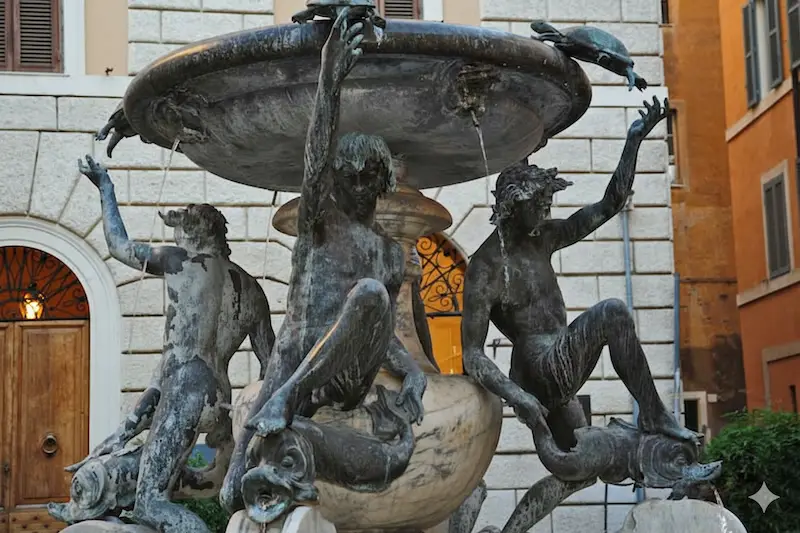
This elegant yet enigmatic fountain is famous for its bronze turtles climbing upward, a feature added decades after the original design. Their meaning remains debated.
Some scholars interpret the turtles as symbols of patience, moral discipline, and spiritual ascent. Others believe they softened the image of a powerful aristocratic family associated with the square.
Its discreet placement suggests it was intended for contemplation, not display—a fountain that rewards careful observation rather than casual glances.
Fontana dei Libri: Knowledge Carved in Stone
Address: Via degli Staderari, near Campo de’ Fiori
This small fountain features stacked stone books from which water flows gently. It stands in a former academic area, once frequented by scholars, printers, and students.
Here, water becomes a metaphor: knowledge must circulate to remain alive. Unlike grand papal fountains, this one speaks quietly—celebrating learning over power.
Fontana del Prigione: Water and Judgment
Address: Vicolo del Prigione, near Via Giulia
Hidden along a narrow alley, this modest fountain once served prisoners held in nearby judicial buildings. Before interrogation or sentencing, detainees were brought here.
Water symbolized purification and submission, not comfort. Its worn stone and austere design reflect a harsher Rome—one where fountains reinforced authority rather than beauty.
Fontana della Botte: A Trade Preserved in Stone
Address: Via della Botte, Trastevere
Shaped like a wooden barrel, this fountain commemorates the wine merchants who once dominated the neighborhood. Water was essential for cleaning barrels and supporting trade.
Today, the fountain stands as a rare urban fossil, preserving the memory of professions erased by modernization.
Fontana delle Anfore: Echoes of Ancient Commerce
Address: Via dei Cartari, near Piazza Navona
This lesser-known fountain incorporates amphora-like elements, referencing ancient Roman trade and storage. Positioned away from main routes, it served practical needs tied to commerce and transport.
Its symbolism connects water to movement, exchange, and survival, not ornament.
Why These Fountains Were Built Small and Hidden
Unlike monumental fountains commissioned by popes, these fountains served specific and controlled purposes:
-
Marking neighborhood boundaries
-
Supplying particular trades or institutions
-
Supporting civic or judicial rituals
-
Communicating authority without spectacle
Their discretion was deliberate—and meaningful.
Final Thoughts
Rome’s most mysterious fountains are not forgotten—they are guardians of memory. They reveal how water shaped justice, trade, learning, and power in everyday Roman life.
Discovering them means understanding Rome not as a museum, but as a living city where even the smallest fountain has something important to say—if you know where to look.


