
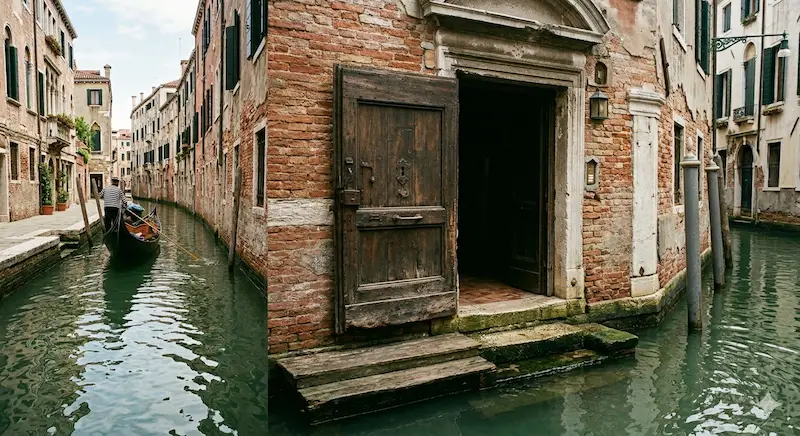
Walking through Venice, one detail often surprises first-time visitors: doors that open directly onto canals instead of streets. At first glance, it may seem unusual or even impractical. In reality, these doors are a key part of how the city has functioned for centuries.
To fully understand these unique features, many travelers explore them through Venice guided tours, where guides explain how architecture, transport, and daily life in Venice are deeply connected to water.
Venice Was Built for Boats, Not Streets
Unlike most cities, Venice developed as a network of canals rather than roads. For centuries, boats were the main form of transportation, used for everything from trade to daily errands.
Because of this, buildings were designed to face the water. These doors, often called water doors, served as the main entrance for:
- merchants
- residents
- deliveries
In many cases, the canal was the front door of the house, not the back.
Water Doors Were Used for Trade and Transport
Venice was a powerful maritime republic, and commerce played a central role in its identity.
Many buildings along the canals were used as:
- warehouses
- merchant residences
- trading hubs
Water doors allowed goods to be transported directly into buildings without needing land routes. This made loading and unloading much more efficient.
Even today, some deliveries in Venice are still made by boat.
Different Doors for Different Purposes
In traditional Venetian buildings, entrances were often divided by function.
- water-level doors were used for goods and transport
- street-level doors were used for pedestrians
This dual access system reflects how Venice balanced life between land and water.
Architecture Designed Around the Lagoon
Venetian architecture evolved to adapt to the lagoon environment. Buildings were constructed on wooden piles and designed to interact directly with canals.
Water doors are part of this adaptation. They allowed buildings to:
- connect with transport routes
- function efficiently in a water-based city
- integrate daily life with the lagoon
The entire city is shaped by this relationship with water.
Why Some Doors Look Unused Today
Many visitors notice that some water doors appear closed or rarely used. This is because modern Venice has partially shifted toward pedestrian movement, especially in central areas.
However, historically these doors were essential, not decorative.
In some neighborhoods, they are still actively used for deliveries and private access.
A Detail That Reveals How Venice Works
These doors may seem like a small architectural detail, but they reveal something fundamental about Venice.
They show that:
- the city was built around canals
- water was central to daily life
- architecture followed function, not convention
Understanding this helps visitors see Venice not just as a beautiful destination, but as a unique urban system unlike any other in the world.
Final Thoughts
The doors that open directly onto water are not unusual when you understand Venice’s history. They are a practical solution shaped by centuries of life in a lagoon city.
By noticing details like these, you begin to understand how Venice truly works. What seems strange at first becomes logical and even essential once you see the city from a different perspective.


