
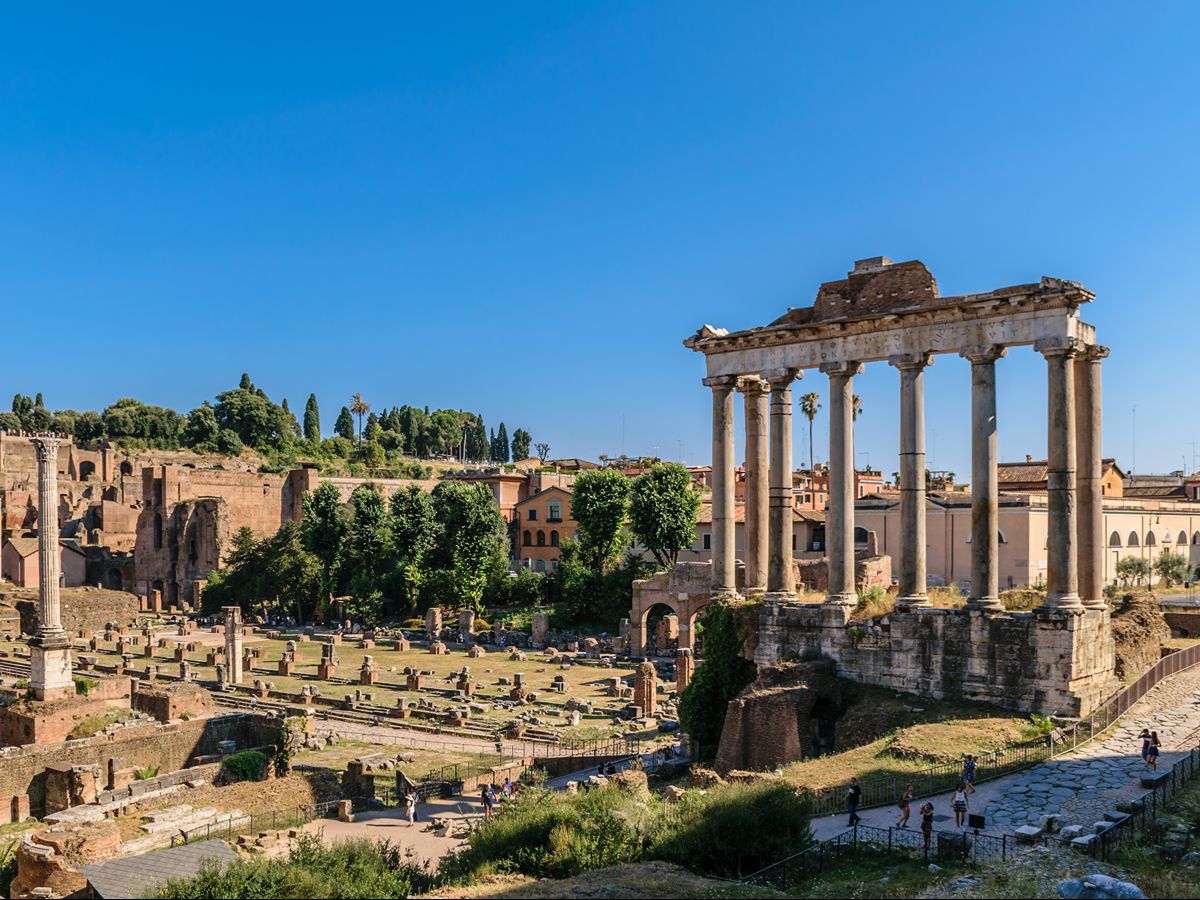
Three days are enough for Rome’s essentials: Ancient Rome on day one, the Vatican on day two and the Baroque centre on day three. Pre-book the Colosseum and the Vatican Museums, keep the Vatican off Sunday, and plan one big site per morning. Afternoons are for walking. With four or five days you can add a slower pace, more museums and a day trip.
Most Rome itineraries try to fit too much in. This one is built around how the city actually works: big sites in the morning before the heat and the crowds, neighbourhoods in the afternoon, and evenings where Romans spend them. If you haven’t decided what to see yet, start with our list of the top things to do in Rome. This article is about putting it into days.
The Plan at a Glance
| Morning | Afternoon | Evening | |
|---|---|---|---|
| Day 1: Ancient Rome | Colosseum, Roman Forum, Palatine Hill | Lunch in Monti, Capitoline Hill viewpoint | Dinner in the Jewish Ghetto |
| Day 2: The Vatican | Vatican Museums and Sistine Chapel | St. Peter’s Basilica, walk to Castel Sant’Angelo | Trastevere |
| Day 3: Baroque Rome | Pantheon, Piazza Navona, Campo de’ Fiori | Trevi Fountain, Spanish Steps, Borghese Gallery or Villa Borghese | Sunset from the Aventine or the Gianicolo |
Day 1: Ancient Rome
Morning: Colosseum, Roman Forum and Palatine Hill (about 3 hours). Book the earliest entry you can get. It’s cooler and quieter, and the Forum and Palatine have very little shade. One ticket covers all three sites, but entry to the Colosseum is timed and the names on the booking must match each visitor’s ID. Before you go, read what you should know before visiting the Colosseum.
Afternoon: Monti and the Capitoline Hill. Have lunch in Monti, the neighbourhood just behind the Forum. Then walk up the Capitoline Hill. The terrace behind the city hall gives one of the best free views over the Forum. Piazza Venezia and the Vittoriano are right below.
Evening: the Jewish Ghetto. It’s a 15-minute walk away and good for dinner, especially if you want to try Roman-Jewish dishes like fried artichokes.
If you’d rather not plan it yourself: our Colosseum, Forum and Palatine group tour covers the whole morning in about 2.5 hours with pre-booked entry.
Day 2: The Vatican
Morning: Vatican Museums and Sistine Chapel (2.5–3 hours). Book a timed entry or a tour well in advance. Our guide to how long you need at the Vatican Museums explains where the time goes. Shoulders and knees must be covered.
Afternoon: St. Peter’s Basilica and Castel Sant’Angelo. Entry to the Basilica is free, but expect a security queue. From St. Peter’s Square, walk down Via della Conciliazione to Castel Sant’Angelo and cross the river on Ponte Sant’Angelo, the bridge lined with Bernini’s angels.
Evening: Trastevere. Cross back over the river for dinner in Trastevere’s lanes. It’s busy, but it’s the best evening walk in the city.
The catch: the Vatican Museums are closed on Sundays, except the last Sunday of the month, which is free and very crowded. If day two falls on a Sunday, swap it with day three.
Day 3: Baroque Rome and the Historic Centre
Morning: Pantheon, Piazza Navona and Campo de’ Fiori. Get to the Pantheon early. It now needs a paid ticket, and the queue grows fast. Then walk five minutes to Piazza Navona and Bernini’s Fountain of the Four Rivers, and on to the market in Campo de’ Fiori.
Afternoon: Trevi Fountain and Spanish Steps, then a choice.
- For art lovers: the Borghese Gallery. It has Bernini’s sculptures and several Caravaggios, but it works only with a timed reservation made well ahead.
- For a slower afternoon: Villa Borghese park and the Pincio terrace above Piazza del Popolo.
Evening: a sunset view. Choose the Orange Garden on the Aventine or the Gianicolo terrace above Trastevere. Both are free.
Tip: the Trevi Fountain is at its best, and least crowded, early in the morning or late at night. If you’re staying nearby, move it to the start or the end of the day.
How to Save Time (and Where Not to Cut Corners)
- Book the two big sites first. The Colosseum and the Vatican sell out in busy months. Our guide on how far in advance to book has the lead times by season.
- Only one guided day? Our private tour of Rome in a day covers the Colosseum, the Spanish Steps, Piazza Navona, the Trevi Fountain, the Pantheon and the Vatican Museums in about 7 hours. It’s intense, but it frees up the other two days. It doesn’t run on Sundays or public holidays.
- Colosseum and Vatican on the same day? It’s possible, but in a 3-day trip you rarely need to. See whether it’s worth doing both in one day.
- Guide or no guide? If you’re unsure, read private vs small group tours in Rome.
- Don’t skip lunch. Rome is a walking city. Three days of 20,000 steps add up, and a proper sit-down lunch is part of the plan, not a waste of time.
Is 3 Days Enough for Rome?
For the essentials, yes. For Rome, no. Three days covers the Colosseum, the Vatican and the historic centre at a good pace. What you give up is depth: the catacombs, the Baths of Caracalla, the Capitoline Museums, a day trip to Tivoli or Ostia, and the time to sit in a piazza with nothing to do. That’s why most first-time visitors are better off with four to five days if they can manage it.
FAQ
Is 3 days enough to see Rome?
Three days is enough for the main sights: the Colosseum and Forum, the Vatican and the historic centre. Four to five days give you a more relaxed pace and time for a day trip.
What is the best order for a 3-day Rome itinerary?
Ancient Rome on day one, the Vatican on day two and the Baroque centre on day three. Keep the Vatican off Sunday, when the Museums are closed except on the last Sunday of the month.
Should I book the Colosseum and the Vatican in advance?
Yes. Both have timed entry and sell out at busy times. Book them as soon as your dates are fixed.
Can I see the Colosseum and the Vatican on the same day?
Yes, with pre-booked entry and the Colosseum in the morning, but in a 3-day trip it’s more enjoyable to give each its own day.
Is Rome walkable in 3 days?
The historic centre is very walkable. You’ll mostly use your feet, with a taxi or the metro between the Colosseum area and the Vatican.
What should I skip if I only have 3 days?
Leave out day trips and the less central museums. Focus on the Colosseum and Forum, the Vatican and the historic centre, and leave a little time to wander.


