
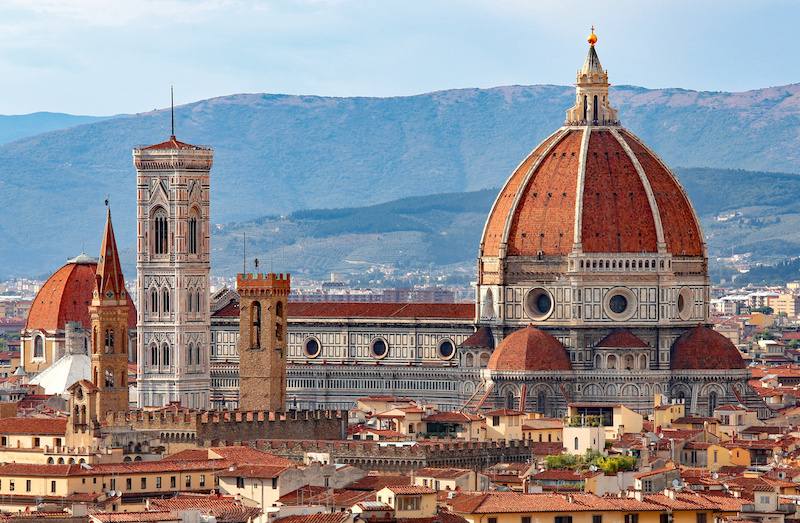
Why Florence Duomo Is the Symbol of the Renaissance
Few landmarks define a city as completely as the Florence Duomo defines Florence. Officially known as the Cathedral of Santa Maria del Fiore, this architectural masterpiece dominates the skyline of the Tuscan capital and stands as one of the greatest achievements of the Renaissance.
For centuries, travelers have admired its magnificent marble façade, climbed the famous Brunelleschi’s Dome, and marveled at the engineering genius that made its construction possible.
Today, the Cathedral of Florence remains one of Italy’s most visited attractions and an essential stop for anyone exploring the birthplace of the Renaissance. Whether you are interested in history, architecture, photography, or panoramic views, the Duomo offers an unforgettable experience.
If you’re planning a longer stay in the city, consider combining your visit with other Renaissance treasures such as the Uffizi Gallery and the artisan workshops of the Oltrarno district.
The Fascinating History of Florence Duomo
Why Was Florence Cathedral Built?
Construction of Florence Cathedral began in 1296, when the city was becoming one of Europe’s wealthiest and most influential centers of commerce and culture.
The people of Florence wanted a cathedral that reflected their growing power and prestige. Designed by Arnolfo di Cambio, the project aimed to surpass every church that had come before it.
However, there was one major challenge: nobody knew how to build the enormous dome that was planned to crown the cathedral.
The Challenge of Building the Dome
For decades, construction continued while the massive octagonal opening remained uncovered.
Architects and engineers struggled to find a solution. Traditional methods required wooden support structures that would have been impossibly large and expensive.
The project appeared destined to remain unfinished.
How Brunelleschi Changed Architecture Forever
Everything changed in the early fifteenth century when Filippo Brunelleschi proposed a revolutionary solution.
Using innovative engineering techniques, he designed a self-supporting dome that could be built without traditional scaffolding.
Today, many visitors choose to learn more about this extraordinary achievement by visiting Brunelleschi’s Dome, one of the most remarkable architectural accomplishments in history.
What Makes Brunelleschi’s Dome So Extraordinary
The World’s Largest Masonry Dome
Even after more than 500 years, Brunelleschi’s masterpiece remains the largest masonry dome ever constructed.
Its dimensions and engineering continue to impress architects and historians from around the world.
The Double-Shell Structure
One of Brunelleschi’s greatest innovations was the creation of a double-shell dome.
The inner shell provides structural support, while the outer shell protects the building and creates the iconic silhouette visible throughout Florence.
Hidden Engineering Secrets
Brunelleschi introduced several groundbreaking techniques, including:
- Herringbone brick patterns
- Internal reinforcement systems
- Custom-built lifting machines
- Innovative construction methods
These solutions allowed workers to build the dome at unprecedented heights.
Can You Climb Brunelleschi’s Dome?
For many visitors, climbing the dome is the highlight of a trip to Florence.
How Many Steps Are There?
Visitors must climb approximately 463 steps to reach the summit.
There are no elevators, making the experience physically demanding but incredibly rewarding.
Is the Climb Difficult?
The climb involves:
- Narrow staircases
- Steep passages
- Confined spaces
- Uneven surfaces
Most reasonably fit visitors can complete the ascent without difficulty.
Who Should Avoid the Climb?
The climb may not be suitable for:
- People with mobility issues
- Visitors suffering from claustrophobia
- Travelers with serious heart conditions
What Will You See at the Top?
The reward is one of the most spectacular views in Italy.
From the summit, visitors can enjoy:
- Panoramic views of Florence
- The Arno River
- Tuscan hills
- Medieval rooftops
- Giotto’s Bell Tower
Florence Duomo Tickets Explained
Do You Need Tickets to Enter Florence Cathedral?
Entry to the main cathedral is generally free, although access procedures may change over time.
Visitors should always verify current regulations before arrival.
Tickets for Brunelleschi’s Dome
Access to the dome requires a separate reservation and timed entry.
Demand is extremely high throughout the year.
What’s Included in the Duomo Pass?
Most combined tickets provide access to:
- Brunelleschi’s Dome
- Giotto’s Bell Tower
- Baptistery of Saint John
- Opera del Duomo Museum
- Santa Reparata
Should You Book in Advance?
Absolutely.
During peak season, tickets often sell out several days in advance.
Best Time to Visit Florence Duomo
Best Time of Day
The best times to visit are:
- Early morning
- Late afternoon
These periods generally offer shorter lines and better lighting conditions.
Best Months to Visit
The most pleasant months are:
- April
- May
- September
- October
How to Avoid Crowds
To enjoy a quieter experience:
- Book the first available entry
- Avoid weekends
- Visit during shoulder seasons
- Reserve dome tickets early
Hidden Details Most Visitors Miss
While most visitors focus on the dome itself, Florence Cathedral contains many fascinating details.
The Clock That Runs Backwards
Above the main entrance hangs an unusual clock that follows an ancient system of timekeeping.
Its hands move differently from modern clocks, making it one of Florence’s most curious historical features.
The Secret Terraces
The cathedral contains hidden terraces that offer unique views of the city and the dome.
These areas remained inaccessible to the public for centuries.
Vasari’s Last Judgment Frescoes
Inside the dome, visitors can admire Giorgio Vasari’s monumental fresco depicting the Last Judgment.
The artwork covers thousands of square meters and remains one of the largest fresco cycles ever painted.
The Marble Facade Symbolism
The colorful exterior combines white, green, and pink marble sourced from different parts of Tuscany.
Each decorative element carries religious and civic symbolism.
Photography Tips for Florence Duomo
Best Photo Spots
Some of the best photography locations include:
- Piazza del Duomo
- Via dei Calzaiuoli
- Piazza San Giovanni
- Giotto’s Bell Tower
Best Sunrise Photos
Early morning offers:
- Soft light
- Empty streets
- Fewer tourists
- Cleaner compositions
Best Sunset Views
Sunset provides dramatic colors that enhance the cathedral’s marble façade.
Photography Rules Inside the Cathedral
Rules may change, but visitors should generally:
- Respect religious services
- Avoid flash photography
- Follow staff instructions
What to See Near Florence Duomo
Giotto’s Bell Tower
One of Florence’s most elegant Gothic structures, Giotto’s Bell Tower offers another incredible viewpoint over the city.
Baptistery of Saint John
Famous for its bronze doors, the Baptistery is among Florence’s oldest religious buildings.
Opera del Duomo Museum
The museum houses original sculptures and masterpieces removed from the cathedral over the centuries.
Piazza della Repubblica
A lively square filled with cafés, restaurants, and historic landmarks.
Piazza della Signoria
One of Florence’s most important public spaces and home to remarkable Renaissance sculptures.
After visiting the Duomo, many travelers continue their exploration at the Uffizi Gallery or discover the authentic atmosphere of the Oltrarno district.
Frequently Asked Questions About Florence Duomo
How long does it take to visit Florence Duomo?
Most visitors spend between 2 and 4 hours exploring the cathedral complex.
Is climbing Brunelleschi’s Dome worth it?
Yes. The climb offers one of the most rewarding experiences and panoramic views in Florence.
Can you enter Florence Cathedral for free?
Access to the cathedral is generally free, while additional monuments require tickets.
How difficult is the climb?
The climb is moderately challenging due to the number of steps and narrow passages.
What is the best time to visit Florence Duomo?
Early morning and late afternoon generally provide the most enjoyable experience.
Final Thoughts
The Florence Duomo is much more than a cathedral. It is a symbol of human creativity, engineering brilliance, and Renaissance ambition.
From the breathtaking beauty of Brunelleschi’s Dome to the hidden details scattered throughout the complex, every visit reveals something extraordinary.
Whether you are climbing to the summit, admiring the marble façade, or exploring Florence’s historic center, the Cathedral of Florence remains one of Italy’s most unforgettable landmarks.
If you have additional time in the city, don’t miss the Uffizi Gallery</a>, the artisan traditions of the Oltrarno district, and some of the hidden gems in Florence that many travelers overlook.


