
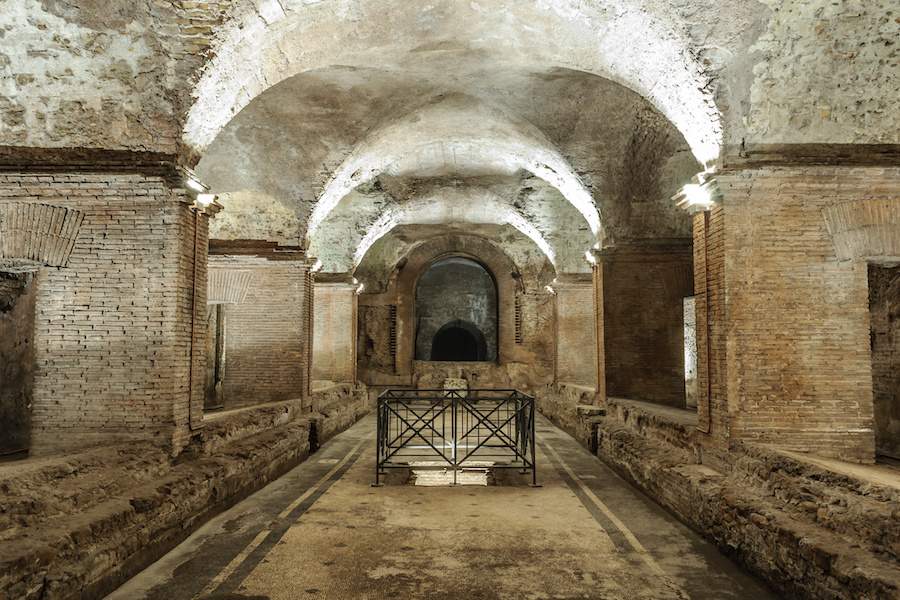
If you want to discover the real Rome, you have to go underground.
There you will find the Rome of the Caesars, catacombs and ancient quarries…
The Rome we all know, is not the ancient city with its millenary history. The real Rome lies hidden underground, and is a precious treasure that only a few know how to discover and appreciate. If you are curious and also want to be part of this small group of enthusiasts, if you want to walk on the same roads and structures as our ancestors, you cannot but join our group for a Rome Underground Tour. Our association, with its love for archaeological speleology, ancient history, discovery and adventure, offers all enthusiasts the opportunity to look into this incredible heritage hidden just a few meters away in underground Rome.
What to visit if you are interested in underground Rome 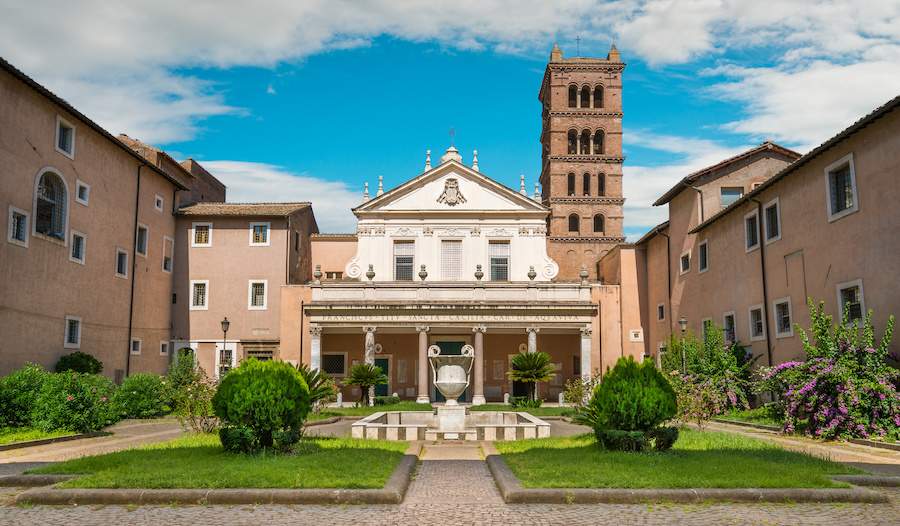
1. Under the Basilica of St Cecilia in Trastevere, there is a room that must have been the home of the Saint, transformed into a titulus in the 5th century.
It was here that Cecilia suffered martyrdom, for having attempted to convert Valerian and his brother Tiburtius: she was in fact locked in the calidarium and exposed to the heat of its vapours for three consecutive days. Since on the third day she had not yet died of suffocation, it was finally decided that she should be beheaded.
2. Stretching from the Palatine to the Colle Oppio, it was by far the most opulent of the imperial residences, the work of Nero. It originally contained an artificial lake, gardens and a forest. It also owed its name to the fact that all the vaults were decorated with gold and other precious stones.
Finally, between the two courtyards was an octagonal hall that rotated incessantly, both day and night.
It is currently a construction site under restoration, which is why it can only be visited at weekends and from the end of October to the beginning of March.
3. The Catacombs of St. Callistus are the oldest and best preserved catacombs on the Appian Way. Along its tunnels are particularly impressive: the Crypt of St. Cecilia, on whose walls are preserved paintings from the 5th-6th centuries (e.g. image of St. Cecilia in a praying pose); and the Crypt of the Popes, also known as the ‘Little Vatican’, because a dozen popes were buried there.
4. The crypt of the Capuchin friars is a rather unusual place, macabre to some, as it is adorned with the bones of some 4,000 Capuchin friars. Eloquent is the inscription that marks the beginning of the visit.
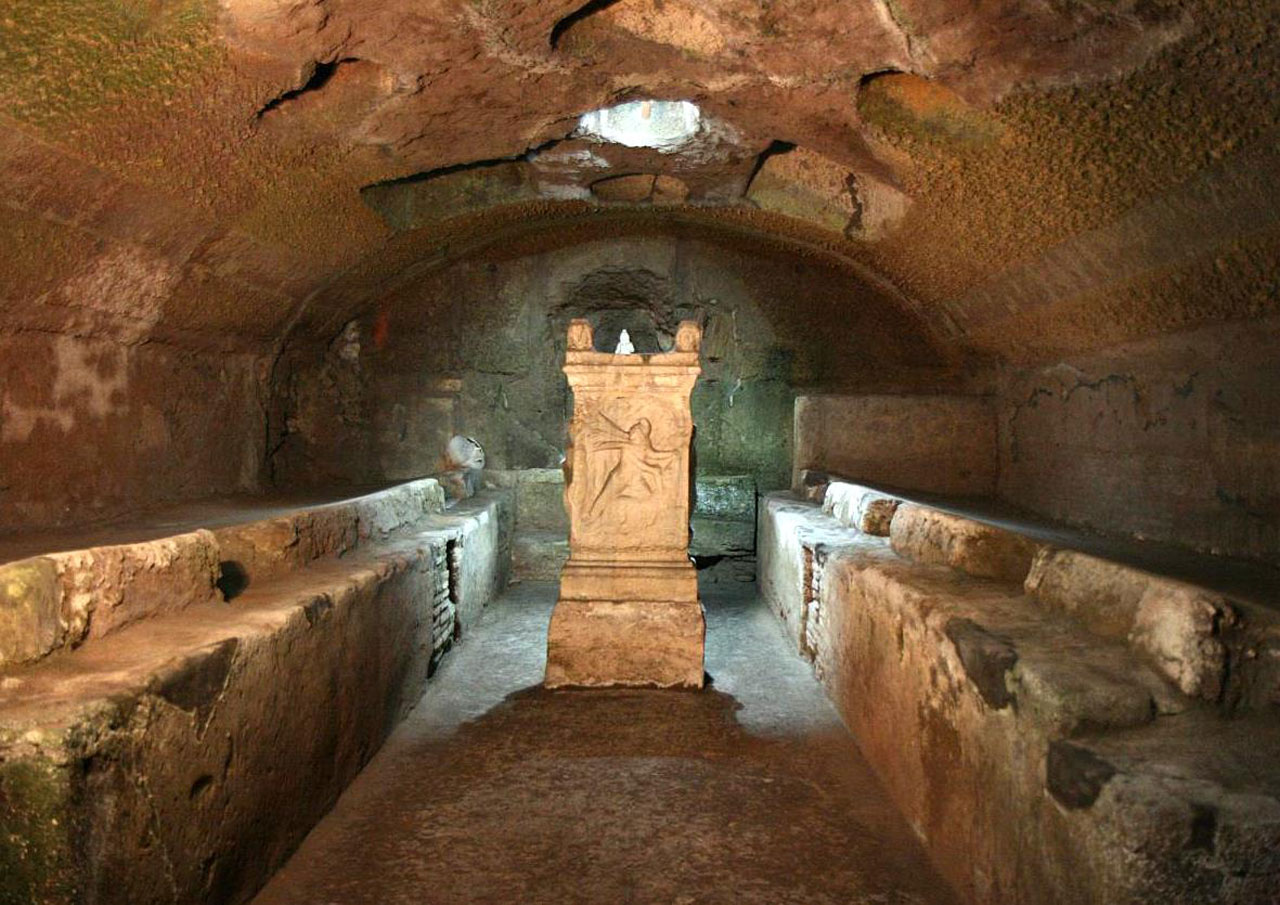
5. Approximately 20 metres below the Basilica of San Clemente, you will find: the ancient early Christian Basilica, which houses a Roman Mithraeum from the 2nd century A.D., characterised by stone benches on which initiates were received and a niche with a depiction of the god killing a bull. Here you will find one of the most unique curiosities of Vulgar Latin, namely the world’s first ‘swear word’ written on a wall.
6. Everyone is familiar with the famous Trevi Fountain. Less well known is the fascinating archaeological stratification that extends beneath the Rione, of which the underground archaeological area of the Vicus Caprarius – The City of Water is a striking example.
Just a few steps away from one of the world’s best-known works, more than nine metres below the current street level, archaeological investigations conducted between 1999 and 2001, during the renovation of the former Cinema Trevi, by the Archaeological Superintendence of Rome (under the scientific direction of Claudio Moccheggiani Carpano) brought to light a building complex dating back to the Imperial Age that represents a remarkable testimony of the urban fabric of ancient Rome.


